
What Surprised Me Most in 2025
Why deep thinking became the scarcest skill in a year of automation.

At the beginning of 2025, I thought I knew what kind of year it would be for the accounting profession. More AI tools. More automation. More noise about efficiency, disruption, and the so-called end of traditional practice.
All of that happened.
But none of it turned out to be the real story.
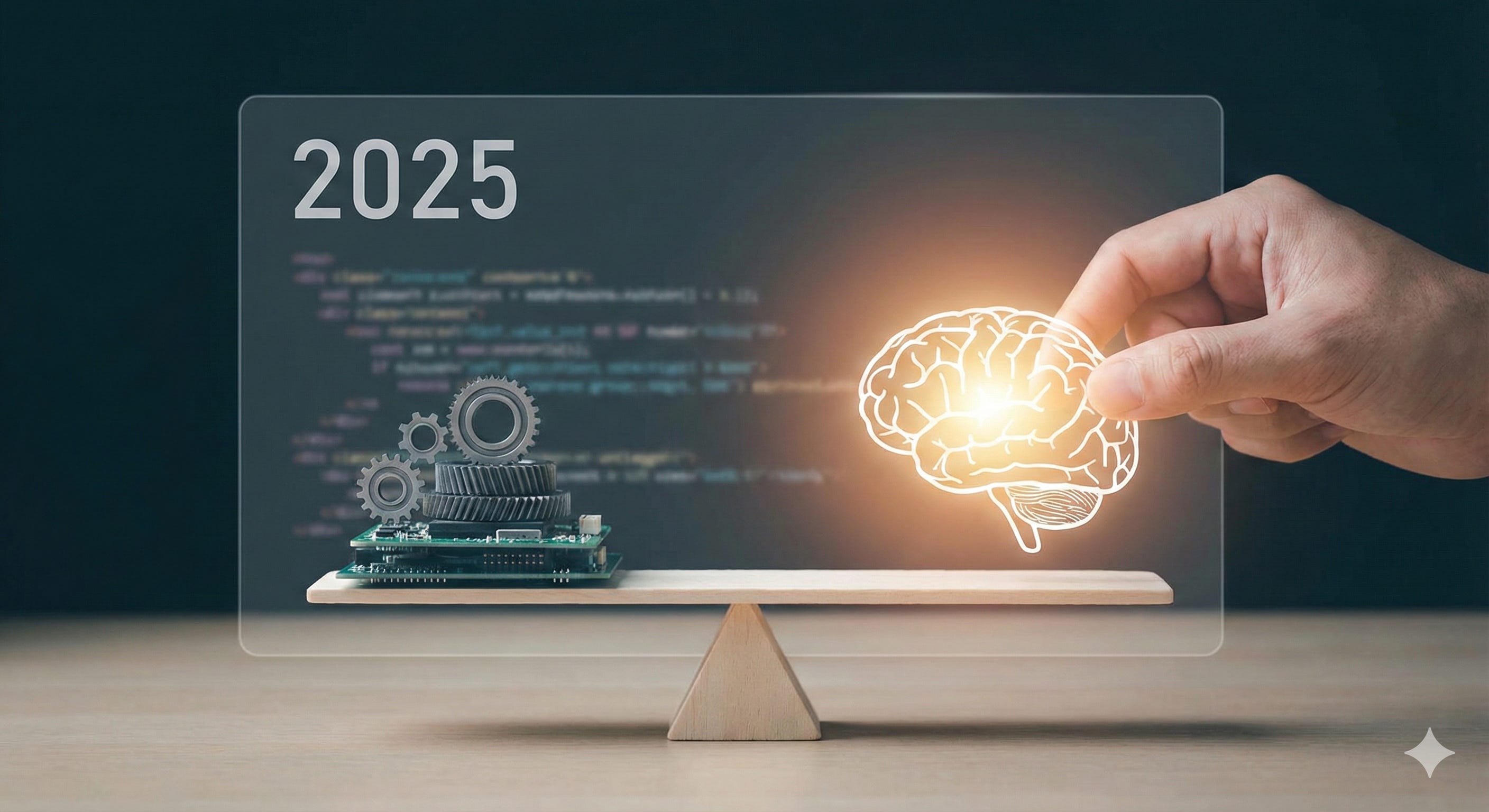
What surprised me most in 2025 was not how fast technology moved, but how quickly thinking became the scarce skill again.
For years, we’ve been told that speed is everything. Faster processing, faster compliance, faster answers. By 2025, that race was effectively over. The tools caught up. In many areas, they surpassed what humans could do manually. Automation stopped being a differentiator and became an assumption.
And when everyone had access to the same tools, something shifted.
The constraint was no longer technology.
It was judgment.
AI didn’t replace accountants in 2025. Instead, it held up a mirror.
It revealed who truly understands the why behind the numbers and who has been relying on templates and checklists. It exposed the difference between someone who can interpret a situation and someone who simply follows a process. It showed who can live with uncertainty and make a call—and who looks for a rule to hide behind.
What surprised me was how quickly clients noticed.
They still wanted things done efficiently, of course. But speed alone stopped impressing them. It was assumed. What they increasingly valued was clarity. Not more reports, not more dashboards, not more data—but help understanding what actually matters, what can safely be ignored, and what decision should come next.
In other words, clients didn’t want more information.
They wanted better thinking.
Another surprise was how human the work became in the middle of all this technology.
Despite all the talk about machines taking over, the accountants who stood out in 2025 were the ones who could listen properly, ask better questions, and explain complex issues in plain English. Technical brilliance mattered far less if you couldn’t bring a client with you. The Ann Marie Test quietly became the standard in my own practice: if you can’t explain it so a normal, intelligent person understands it immediately, it isn’t finished.
There was also a discomfort to this shift that I hadn’t fully anticipated.
Automation is easy to discuss because it feels objective. Judgment is harder because it requires ownership. It means saying, “This is my view,” instead of, “This is what the system says.” In 2025, the profession didn’t divide between those who use AI and those who don’t—it divided between those willing to think deeply and stand behind their conclusions, and those hoping the tools would remove the need for that responsibility.
And then there was purpose.
As the pace increased and the noise got louder, more accountants began asking quieter, more meaningful questions. What kind of work do I actually want to do? Who do I want to help? What does a good practice look like—not just financially, but personally? In a strange way, AI accelerated not just efficiency, but reflection.
Looking back, 2025 wasn’t the year accounting became automated.
It was the year it became clear that automation was never the point.
The real edge—the accountant’s edge—turned out to be judgment, clarity, and the ability to think well when the answer isn’t obvious.
That genuinely surprised me.
And, in a profession that sometimes forgets its own value, it gave me real encouragement for what comes next.
Wishing you a very Happy New Year. I look forward to writing and sharing much more with you in 2026.